Yes, yoga can curb hair fall. These 4 poses will make your mane grow long and strong
If you’re suffering from hair fall and don’t know what to do, give yoga a chance. These four yoga poses can curb hair loss triggered by stress and hormonal imbalance.
Shoulder stands can help control hormones causing hair loss. Image courtesy: Shutterstock
Hair fall is a common problem–one that is hard to escape. Many studies prove that your hair is a reflection of your overall health. There are many reasons why you could be losing hair–from your diet habits to genetic disposition. That said, if your hair fall is caused by stress or hormonal imbalance–yoga is here to help.
Here are four yoga poses that can put a stop to your hair loss:
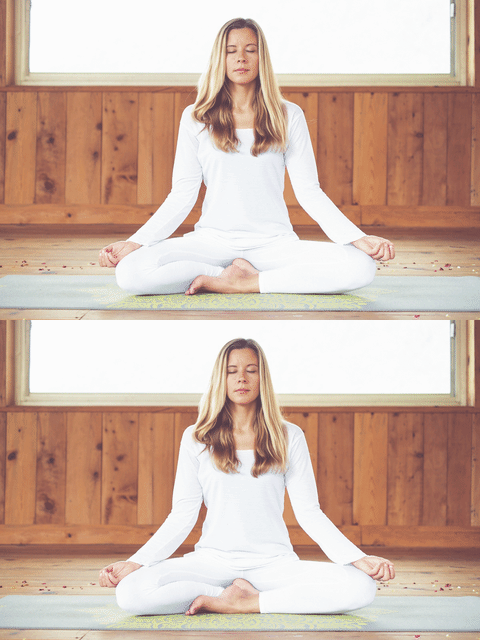
1. Pranayama or full yogic breath If stress is the culprit behind your mane issues, try pranayama to reach a meditative state and quieten your mind:
Keep your spine erect and sit in a comfortable cross-legged posture.
Rest your palms on your knees and keep your eyes gently closed.
Inhale deeply through your nostrils and focus on expanding your chest and your belly.
Exhale completely, contracting your belly first and then your chest.
GIF courtesy: GIPHY
With this, you’ve completed one round of pranayama–do this nine more times. With practice you can focus on long and more controlled exhalations. For example, if you inhale for 3 seconds, exhale for 6 seconds.
2. Anuloma viloma or alternate nostril breathing Another way to do pranayama, with this pose you can reduce stress and relax:
Sit in a comfortable position, keeping your spine erect. Bring your right hand to your face, palm facing towards you, and bend your middle three fingers. Only your thumb and little finger should be turned out.
Rest the palm of your left hand on your left knee and gently close youe eyes.
Inhale deeply through your nostrils and exhale.
Using your right thumb, block the right nostril, inhaling through the left. Make sure your right elbow is placed comfortably.
Now using the little finger of your right hand, block the left nostril, exhaling through the right.
This completes one round of anuloma viloma, continue this for five more rounds and then switch sides–inhaling through the right nostril and exhaling through the left.
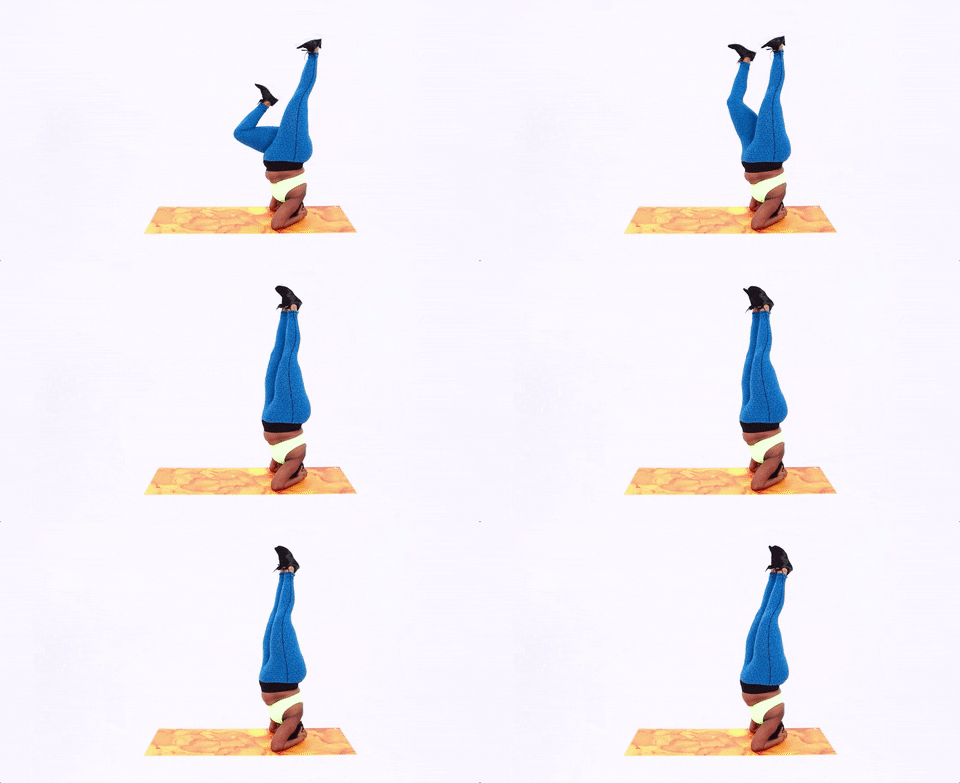
3. Sirsasana or headstand Go upside down to lighten up! The health benefits of sirsasana are astonishing: it reverses ageing, increases blood flow to the brain, tranquilizes and mellows the nervous system.
Sit in vajrasana
Grab your elbows with opposite hands
Now extend your grabbed elbows forward by bending the upper body.
Interlock the fingers so that it looks like a triangle between the forearms.
Lift your hips up straightening your legs, and place the top of your head within the locked palms in a way that the back of the neck is straight.
Walk forward with your toes towards your head so that your hips come straight above the shoulders.
Keep pushing your shoulders away from the ears to balance.
If you think you’re ready to balance with your upper body, fold one leg at the knee and then the other. Slowly and steadily straighten both your legs, paying attention to your core.
Hold for a minute with deep breathing and slowly bring your knees down to come back.
GIF courtesy: GIPHY
Follow the headstand with balasana or child pose.
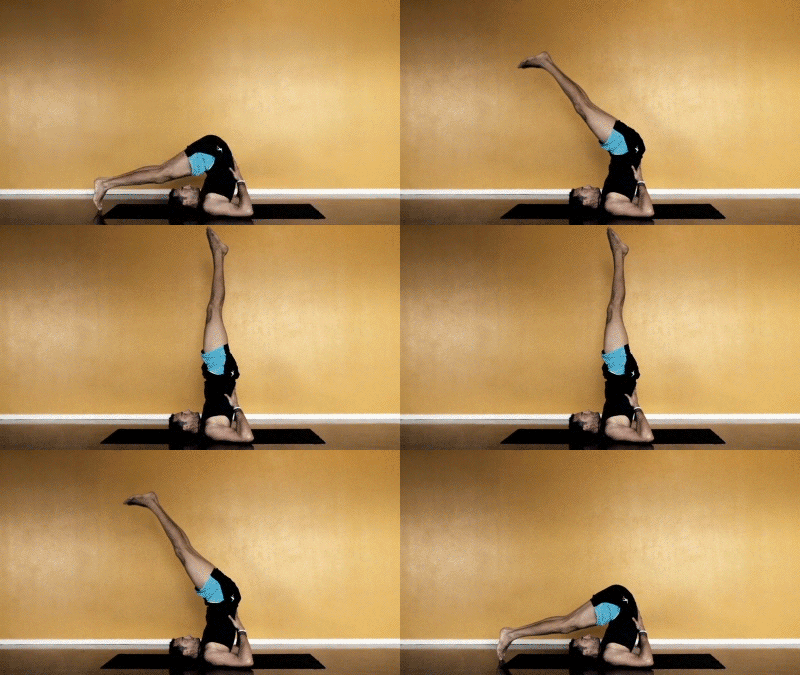
4. Sarvangasana or shoulder stand If hormonal imbalance, especially that caused by thyroid is the reason why you’re shedding hair then try sarvangasana. B.K. Iyengar yoga champions this pose as a way to balance the thyroid gland and improve blood circulation.
Lie on your back with legs stretched together and arms on the side of the body.
Inhale, lift your hips up and place the palms on your lower back for support
Contract your glutes and raise your legs higher by pushing your elbows inwards towards each other and pelvis towards your head. The idea is to bring the hips above the shoulders.
Try to straighten your neck so that there’s enough room between the chin and the chest to allow you to breathe.
Hold the pose for at least 30 seconds.
Fold the legs at the knees and straighten your arms–placing the back, the hips and the feet on the mat to come back.
GIF courtesy: GIPHY
Practice these poses at least three times a week to see the benefits.
Keep an idea of your risk of weight-related issues.
Swati Kain is a hatha yoga teacher, currently teaching in Spain. She has a post-graduate degree in yogic sciences from Morarji Desai National Institute of Yoga, New Delhi. Later she pursued her teachers’ training course from Sivananda Yoga Vedanta Centre, Kerala. ...Read More
 Channel
 Channel
 Channel